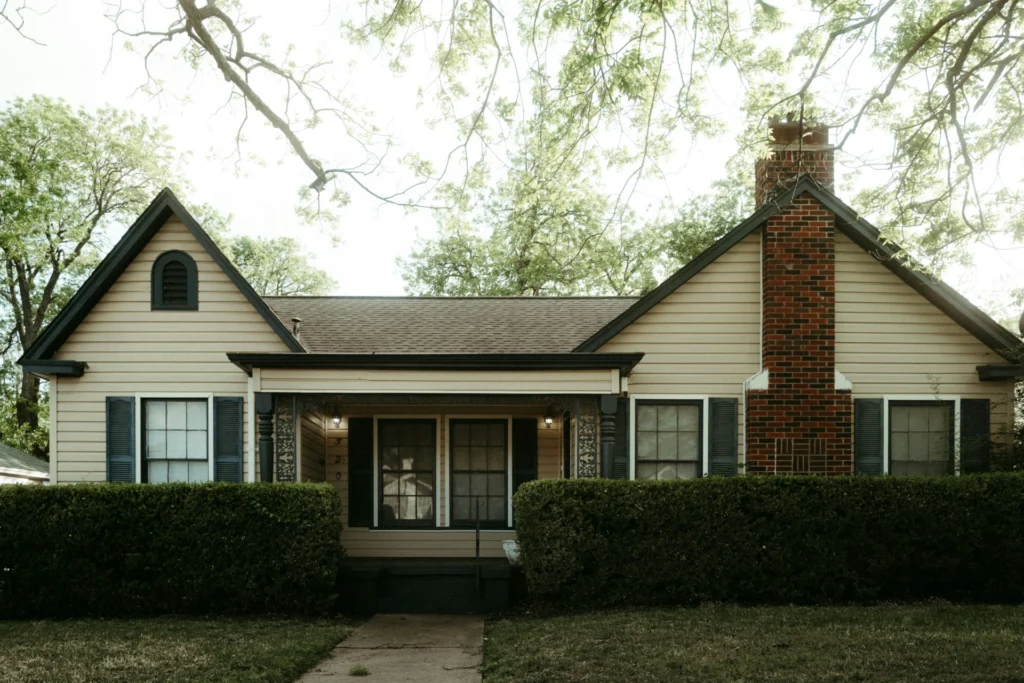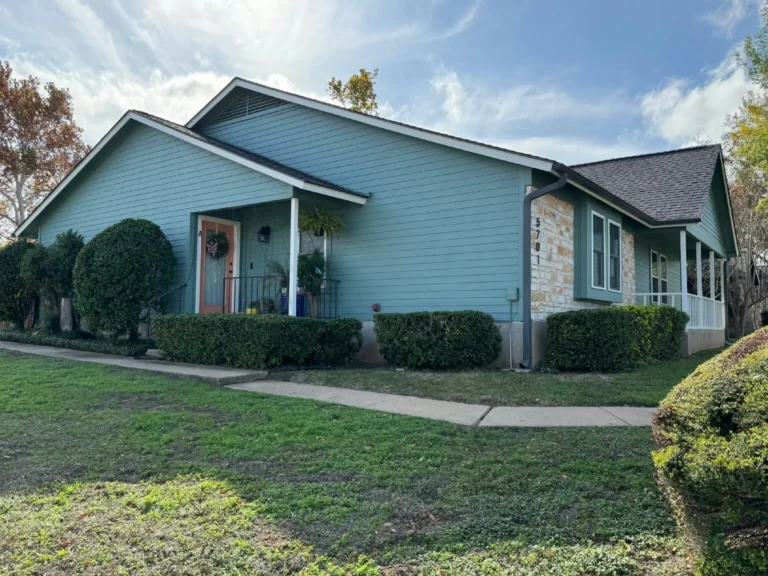
You know the walk. You decide you’re going to sell, and suddenly you see your house differently. The cracked tile at the base of the hallway you’ve stepped over for three years. The ceiling stain from a leak you fixed in 2021 but never repainted. The HVAC that runs fine but is fifteen years old. The master bath with the original builder fixtures.
Most sellers answer the question of what to fix by guessing. They either overspend on renovations that don’t move the needle, or they skip repairs that surface in the buyer’s inspection and become expensive negotiating leverage. Both mistakes cost money.
As a licensed realtor and General Contractor working in Round Rock and across the greater Austin area, I can tell you what buyers want to see, and what the work costs. I can tell you both at the same time, which means I can actually answer the question sellers are asking: what’s worth doing and what isn’t?
A good framework organizes pre-listing repairs into three categories. Understanding the difference between them is the whole game.
The Framework: Three Categories of Repairs
Category 1: Repairs that move the needle
These are repairs where the return exceeds the cost — where spending money before listing produces more money at sale than you spent. In the Round Rock market, this category is mostly cosmetic updates, curb appeal improvements, and fixes that remove buyer objections before they can be weaponized at negotiation.
Category 2: Repairs that don’t pay back
These are legitimate improvements that simply don’t return their full cost at sale in most resale scenarios. Buyers don’t pay dollar-for-dollar for upgrades in a resale home the way they might in a new build. A complete kitchen gut renovation is the most common example. It might look stunning. It rarely pencils out.
Category 3: Non-negotiable fixes
These are items that will surface in a buyer’s inspection and create deal risk. Ignoring them doesn’t make them disappear — it just means a buyer discovers them and uses them as leverage for a price reduction, a repair credit, or a contract termination. Sellers are almost always better off knowing about these in advance and deciding how to handle them proactively.
My pre-listing walk-through starts with this framework. I walk the property as a GC — not just as an agent checking for staging opportunities — and categorize what I find. Here’s how each category looks in practice.
Repairs That Move the Needle in Round Rock
Fresh paint — interior first, exterior where needed
Paint is the highest return-on-investment update in almost every resale situation. Neutral, updated interior colors signal a well-maintained home to buyers. They also photograph better, which matters enormously in a market where every buyer — especially those relocating from out of state — are making decisions based on listing photos before they ever walk through the door. In the Round Rock market, dated paint colors are one of the most common and cheapest buyer objections to eliminate. A professional interior paint job on an average Round Rock home typically runs $3,000 to $6,000. The return is consistently higher.
Flooring updates in main living areas
Old carpet in main living areas — especially anything stained, worn, or obviously dated — is one of the first things buyers notice and the first thing they start budgeting in their heads. Replacing main-floor carpet with luxury vinyl plank (LVP) or refinishing existing hardwoods returns well in this market. The key word is “main” — prioritize entryways, living rooms, and hallways. Replacing carpet in a guest bedroom no buyer will ever see first doesn’t move the needle the same way.
Curb appeal: front door, landscaping, driveway
The first photo on a listing is almost always the front of the house. In a neighborhood of similar homes, curb appeal is often what makes a buyer click through rather than scroll past, and what sets the price anchor before they ever see the inside. A freshly painted or replaced front door ($300 to $800 installed), clean and trimmed landscaping, and a power-washed driveway cost a fraction of what a bad first impression costs in missed opportunities. These are high-ROI, low-effort improvements that every seller in Round Rock should address before listing.
Kitchen and bath cosmetics (not full remodels)
There is a meaningful difference between a cosmetic kitchen update and a full kitchen renovation. Replacing cabinet hardware, updating light fixtures, repainting or refacing cabinets, and swapping out a dated countertop or 70s era toilet in the main bathroom return well when the underlying structure is sound. These are the kinds of updates that change a buyer’s perception of a home without requiring a $40,000 full gut. Full replacements of cabinets, appliances, and layout are a different category — more on that below.
HVAC servicing and documentation
Buyers in Texas ask about the HVAC. It’s one of the first questions and one of the first inspection points. If the system is older but functional, having it professionally serviced and putting the service documentation in the seller’s packet removes it as an inspection negotiation point. A buyer who sees a recent service record treats the HVAC very differently than a buyer who sees an unknown. If the system is clearly at end-of-life, the question of whether to replace it before listing is one that needs to be addressed — whether we bring the asking price down by exactly what the replacement cost is or replace it and keep the price the same.
Water heater
This follows the same logic as the HVAC – a water heater that is within its service life, recently serviced, and documented is a non-issue in any inspection. One that fails or raises flags becomes an immediate credit negotiation. I assess whether a water heater is likely to surface as a problem before a buyer’s inspector does.
Repairs That Usually Don’t Pay Back
Sellers sometimes need explicit permission to skip things they’ve convinced themselves they should do. Here it is.
Full kitchen remodels
A complete kitchen renovation — new cabinets, new appliances, new countertops, new layout — rarely returns its full cost in a resale sale. Buyers may love the result, but the resale market does not price renovated kitchens at replacement cost. The ceiling on what buyers will pay is set by comparable homes in the neighborhood, and a $50,000 kitchen renovation in a market of $500,000 homes will not push the sale price to $550,000. Cosmetic updates can make an impact, but a full gut almost never gets you a dollar for dollar return.
Luxury bathroom additions
Adding square footage or high-end features to a bathroom in a market where comparable homes don’t have them rarely returns the investment. A $25,000 master bath renovation in a neighborhood of $450,000 homes will not consistently produce a $25,000 increase in sale price. The reality is that the market sets the ceiling in Round Rock (and every other city for that matter).
Pool installation
This surprises more sellers than would be expected, but pools in Texas add buyer appeal in some price ranges while actually narrowing the buyer pool in others. Some buyers want the pool; others don’t want the maintenance cost and liability. Installing a pool specifically to increase resale value rarely produces a full return. If you’re building one for your own enjoyment and plan to sell in five years, that’s a lifestyle decision. As a resale investment alone, don’t expect it to pencil.
Replacing items that are old but functional
A 12-year-old roof that passes inspection does not need to be replaced before listing. A 15-year-old HVAC that runs well and has been recently serviced does not need to be replaced. Buyers will ask about age. But condition, documentation, and remaining service life are what actually matter in the negotiation — not age alone. I help sellers understand exactly which items fall into the “old but fine” category and which ones have a real problem underneath the age, just contact me to set up a free consultation.
Non-Negotiable Fixes: What You Can’t Afford to Ignore
These are the items that will surface in a buyer’s inspection and create real deal risk. Sellers who know about them in advance are in a far better position than sellers who discover them through a buyer’s inspector.
Foundation issues
In Central Texas, foundation movement does happen and inspectors know exactly what to look for. Sticking doors, cracked drywall at corners, gaps between walls and ceilings — these are signs a good inspector will flag every time. A seller who discovers foundation concerns during a buyer’s inspection is in a negotiating position they don’t want to be in. I can assess whether visible signs of movement indicate a real structural issue or normal settling. When it’s real, addressing it before listing is almost always the better path.
Roof condition
Texas homeowners’ insurance companies have become increasingly aggressive about roofs in recent years – especially in Round Rock where we’ve had hail storms (and the subsequent insurance claims for roof replacements) every year for the past few years. A roof in poor condition can create an insurance eligibility issue that kills a deal independent of what the buyer and seller agreed to. Roof condition needs to be assessed before listing, not discovered by a buyer’s inspector who then flags it to their lender and insurance carrier.
Plumbing and visible water damage
Visible leaks, slow drains, and signs of water damage under sinks are red flags in any inspection — not because they’re necessarily expensive to fix, but because they suggest to buyers that there may be more beneath the surface. Clean these up before listing. They are usually inexpensive to address and disproportionately expensive to leave for a buyer to find.
Electrical panel
Certain outdated panel types — Federal Pacific, Zinsco, improperly installed aluminum wiring — are inspection red flags that can affect both buyer financing and homeowners insurance. These are not cheap fixes, but they are items that will come up and that sellers are better off identifying before a buyer’s inspector does.
Attic condition
Many buyers request an attic inspection, and many inspectors include it as standard. Pest damage, moisture intrusion, and improper framing repairs are all visible in the attic and all generate buyer concerns. My GC background matters here: I know what I’m actually looking at in an attic, not just that something looks unusual.
What a Pre-Listing Walk-Through Actually Looks Like
Before any listing conversation begins, I walk the property as a contractor. That means every room, the attic, the exterior, the mechanical systems. I’m not just looking for staging opportunities — I’m looking for what a buyer’s inspector is going to find.
What comes out of that walk is a clear picture organized around the three categories above: what’s worth doing, what can be skipped, and what can’t be ignored. I also provide realistic cost estimates for any recommended work — not ballpark guesses, but contractor-level estimates, because I’m also a GC and I know what things actually cost in the current Central Texas market.
If a seller has $10,000 to put into the home before listing, I can tell them exactly where that money will do the most work. If they have $25,000, the answer changes. The budget shapes the plan, and the plan should be based on real numbers. And if you have work without a budget, there are still options (just contact me to figure out how we can make it work).
For sellers who want me to manage the repairs rather than finding and coordinating their own contractors: I can do that. As a GC, I can take the work from assessment through completion. That is not a service most realtors can offer, and it’s one of the reasons sellers I work with tend to go to market with fewer surprises.
Ready to Know What Your House Actually Needs?
Every seller wonders what to fix and what to skip. Most guess. Sellers who work with me get a GC’s assessment of their home and a realtor’s read on what the Round Rock market will pay for — in the same conversation, from the same person.
If you’re getting ready to sell in Round Rock or the greater Austin area and want to know what your home actually needs before it goes on the market, contact me directly. I’ll walk the property, tell you exactly what matters, and build a plan that doesn’t waste money on the wrong things.